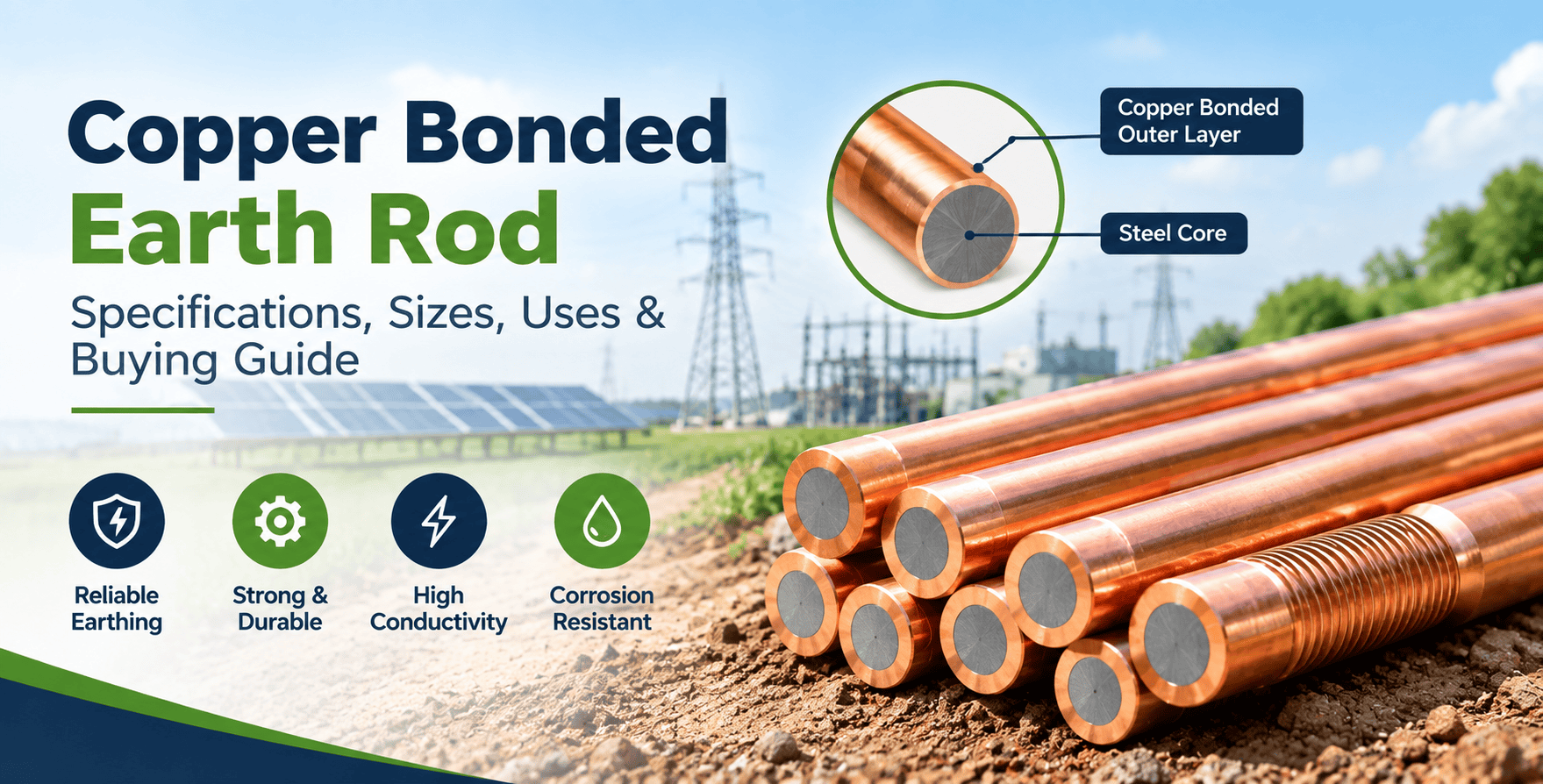
Copper Bonded Earth Rod: Specifications, Sizes, Uses & Buying Guide
Every electrical, industrial or infrastructure installation needs a dependable earthing system. A copper bonded earth rod gives unwanted electrical current a safe path into the ground. The steel core gives the rod the strength to be driven into the soil, and the copper surface handles conductivity and resists corrosion.
You'll find these rods in industrial plants, solar projects, substations, telecom towers and commercial buildings, among other grounding setups. Picking the right one isn't a matter of grabbing whatever is on the shelf, though. Size, copper coating, length, soil conditions and the demands of your project all play a part.
What Is a Copper Bonded Earth Rod?
A copper bonded earth rod is a grounding electrode with a steel core and a layer of copper permanently bonded to the outside. The steel keeps the rod strong while it's being installed, and the copper makes a good conductive contact with the soil around it.
It's tempting to choose an electrode by its dimensions alone, but the whole grounding system matters more. Soil resistivity, installation depth, connections and the number of electrodes all affect how well the earthing performs.
How Does a Copper Bonded Earth Rod Work?
The grounding conductor carries fault or surge current toward the earth electrode. The rod then links the electrical grounding system to the soil around it, letting that current disperse safely.
How well this works depends on several things: soil resistivity, electrode depth, spacing, connections and the conditions on site. That's why the electrode should be chosen to match the technical requirements of the project rather than picked at random.
Copper Bonded Earth Rod Specifications
Before you buy, it helps to know what to look for in the copper bonded earth rod specifications. Here is what to check:
|
Specification |
What to Check |
|
Core material |
Steel core |
|
Copper layer |
Copper bonding quality |
|
Diameter |
Based on project requirements |
|
Length |
Based on grounding design |
|
Coating thickness |
Required copper thickness |
|
Connection |
Threaded or compatible connection |
|
Accessories |
Clamps and couplers where required |
|
Testing |
Applicable quality documentation |
Available specifications differ from one manufacturer to another, and from one application to the next. Confirm the diameter, length and copper coating before you place an order.
Copper Bonded Rod Size: How to Choose?
The right copper bonded rod size comes down to your grounding design, your soil conditions and how the rod will be installed. Diameter and length are the two dimensions that matter most.
A longer rod isn't automatically the better choice. Soil resistivity can change with depth, and the earth resistance you need depends on the grounding arrangement as a whole.
Before buying, tell the manufacturer about your application, the length and diameter you need, the quantity and any project specifications. With that information, they can recommend a suitable electrode instead of leaving you to settle for a generic size from the market.
Key Benefits of a Copper Bonded Earthing Rod
A copper bonded earthing rod pairs the strength of a steel core with the conductivity of copper. The main benefits are:
-
Strong mechanical construction
-
Good electrical conductivity
-
Corrosion-resistant outer surface
-
Availability in different sizes
-
Suitability for industrial and infrastructure applications
-
Compatibility with suitable grounding accessories
The quality of the copper bonding has a big effect on long-term performance. Don't judge it by appearance alone. Ask the manufacturer for construction details and product specifications.
Where Are Copper Bonded Earth Rods Used?
A copper bonded earthing electrode works in many kinds of grounding installations, including:
-
Industrial plants
-
Solar power projects
-
Electrical substations
-
Telecom towers
-
Commercial buildings
-
Manufacturing facilities
-
Data centres
-
Lightning protection systems
In each case, the electrode specification should follow the electrical design, the soil conditions and the application.
Copper Bonded Earthing Electrode vs GI Earthing Electrode
A copper bonded earthing electrode typically has a steel core with a copper-bonded surface, whereas a GI electrode is made of galvanized steel or iron.
|
Factor |
Copper Bonded Electrode |
GI Electrode |
|
Construction |
Steel core with copper bonding |
Galvanized steel |
|
Outer material |
Copper |
Zinc |
|
Conductivity |
High |
Lower than copper |
|
Mechanical strength |
Strong |
Strong |
|
Selection |
Application-specific |
Application-specific |
No single material suits every project. Let soil conditions, grounding requirements, environmental exposure, budget and project specifications guide the decision.
Copper Bonded Earthing Rod in India: Buying Checklist
If you're buying a copper bonded earthing rod in India, look at more than the quoted price. Here's what to check:
-
Rod diameter and length
-
Copper coating specification
-
Core material
-
Connection arrangement
-
Compatible clamps and couplers
-
Quality or test documentation
-
Quantity requirements
-
Packaging and delivery
-
Application suitability
For industrial and infrastructure work, giving the supplier your full project requirements up front goes a long way toward avoiding an unsuitable product.
Copper Bonded Earth Rod Price: What Affects Cost?
The copper bonded earth rod price depends on the product configuration and the details of your order. These factors can move the price:
-
Diameter and length
-
Copper coating thickness
-
Quantity
-
Connection arrangement
-
Accessories
-
Testing requirements
-
Custom specifications
-
Transportation
Don't just compare the price per piece. Ask for quotations on identical specifications so you're comparing like with like.
How to Choose a Copper Bonded Earth Rod Manufacturer or Supplier?
Choosing a copper bonded earth rod manufacturer means looking closely at product quality, specifications and manufacturing capability. Consider:
-
Consistent product specifications
-
Copper bonding quality
-
Available sizes
-
Testing documentation
-
Manufacturing capability
-
Bulk-order support
-
Technical assistance
-
Delivery arrangements
The same points apply when you're sizing up a copper bonded earth rod supplier. A good supplier understands your application and helps you choose the right product, rather than pushing the lowest price.
Why Choose iTorrent Industries Pvt Ltd?
iTorrent Industries Pvt Ltd offers earthing and electrical grounding solutions for industrial and infrastructure applications, with a product range built to suit different project requirements.
If you need a copper bonded earth rod, you can talk through the diameter, length, quantity, application and specifications with the iTorrent Industries team before you order.
That application-focused approach makes it easier to end up with a grounding solution that fits your project.
FAQs
1. What is a copper bonded earth rod?
It's a grounding electrode with a steel core and a copper-bonded outer layer. The design combines mechanical strength with electrical conductivity and corrosion resistance.
2. What is a copper bonded earthing electrode used for?
It's used in the grounding systems of industrial plants, solar projects, substations, telecom infrastructure, commercial buildings and other electrical installations.
3. How do I select a copper bonded rod size?
Before settling on a diameter and length, think about soil conditions, grounding design, installation depth, the earth resistance you need, available space and connection requirements.
4. What affects copper bonded earth rod price?
Diameter, length, copper coating thickness, quantity, accessories, testing requirements and delivery conditions can all shape the final quotation.
5. How do I choose a copper bonded earth rod manufacturer?
Look at product specifications, copper bonding quality, available sizes, quality documentation, manufacturing capability, bulk supply and technical support.
Final Thoughts
Choosing the right copper bonded earth rod takes more than comparing prices. Diameter, length, copper bonding, coating specification, soil conditions and connection requirements all count.
If you have an industrial, solar, telecom, commercial or infrastructure project, get in touch with iTorrent Industries Pvt Ltd with your specifications and discuss a suitable earthing solution.